Your Complete Guide to MRI Technician Training and Certification
Facts:
- MRI technology uses no ionizing radiation.
- Demand for skilled MRI techs is growing steadily.
Navigating the Path to Becoming an MRI Technologist
Embarking on a career as a Magnetic Resonance Imaging (MRI) Technologist is a rewarding journey into the heart of diagnostic medicine. This field requires a unique blend of technical skill, patient care, and a deep understanding of human anatomy. Comprehensive MRI technician training is the essential first step, providing the foundational knowledge and hands-on experience needed to operate sophisticated imaging equipment. This guide will explore the critical aspects of the career, from initial educational choices to the final certification process, giving you a clear roadmap for success in this dynamic healthcare role.
Understanding the Core MRI Technician Training Requirements
Before you can enroll in a program, you must meet several key mri technician training requirements. These prerequisites ensure that candidates have the necessary academic foundation to succeed in a rigorous medical training program. Typically, applicants need a high school diploma or GED. Strong coursework in science and mathematics, particularly biology, anatomy, physics, and algebra, is highly advantageous. Some programs may also require prerequisite college-level courses, CPR certification, or a background check and drug screening. Fulfilling these initial mri technician training requirements is the gateway to beginning your specialized education and is a non-negotiable step in the process.
Exploring MRI Technician Education Pathways
There are several distinct education pathways to becoming an MRI technologist, each catering to different career goals and previous educational backgrounds. The most common route is an Associate of Science (A.S.) in Radiologic Technology, followed by specialized training in MRI. Another of the popular education pathways is a direct certificate program in MRI, which is ideal for individuals who already hold a degree in a related healthcare field, such as registered nurses or radiologic technologists. For those seeking leadership or academic roles, a Bachelor of Science (B.S.) offers a more comprehensive curriculum. Choosing the right path depends on your existing credentials, timeline, and long-term career aspirations. Each program will cover essential topics like patient safety, MRI physics, cross-sectional anatomy, and clinical practice.
The MRI Technician Job Role Overview: A Day in the Life
A detailed job role overview of an MRI technician reveals a position that is both technically demanding and deeply people-oriented. The primary responsibility is to operate MRI scanners to produce high-quality diagnostic images as ordered by a physician. This involves positioning patients correctly, explaining the procedure to alleviate anxiety, and ensuring their comfort and safety throughout the scan. Technicians must also be proficient in setting the correct imaging parameters on the machine's complex computer system. A significant part of the job role overview includes maintaining patient records, ensuring equipment is functioning correctly, and sometimes administering contrast dyes. Strong communication skills are vital for interacting with patients and collaborating with radiologists and other medical staff.
A Look Inside the MRI Technician Work Environment
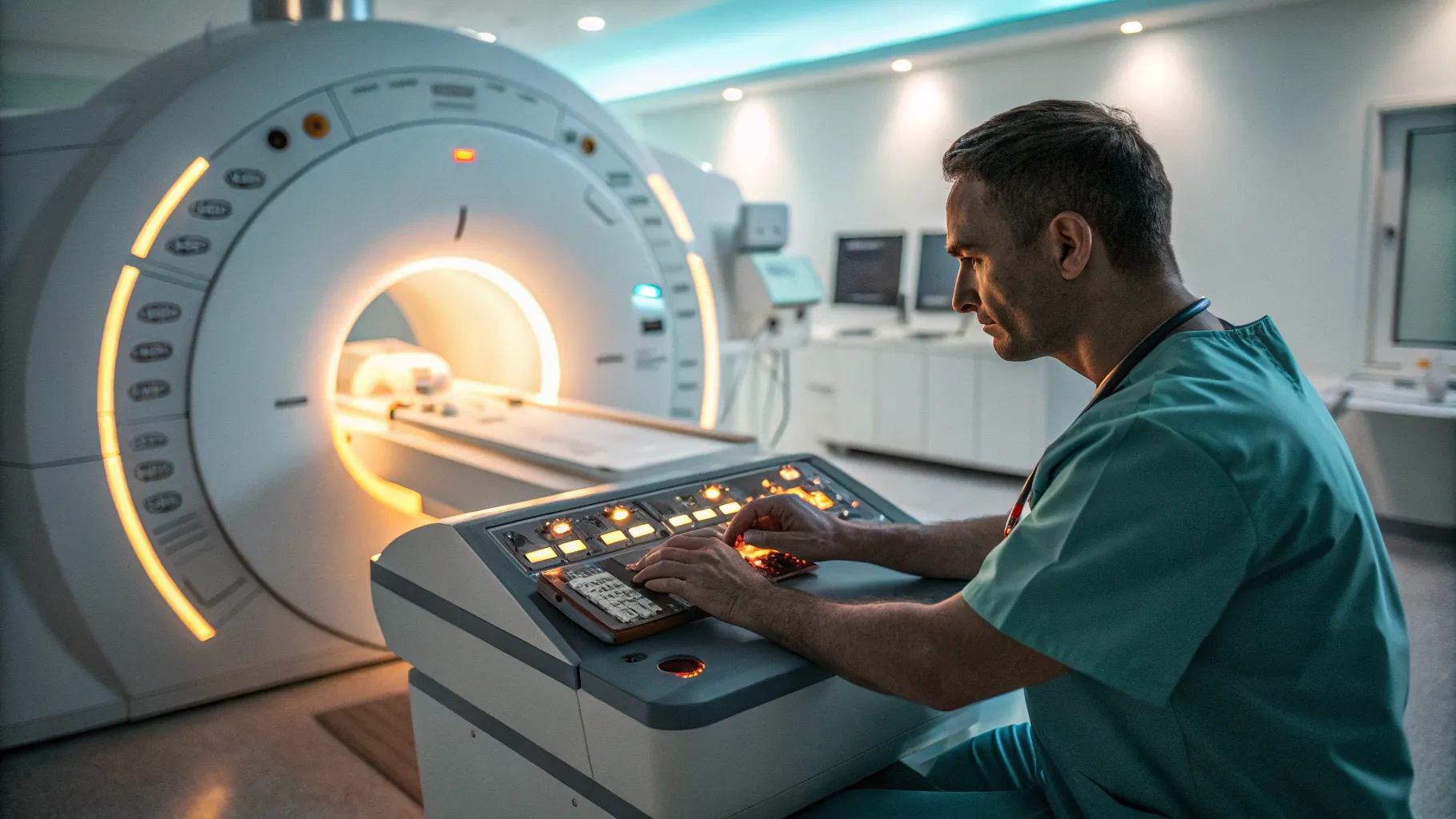
The typical work environment for an MRI technician is a clean, well-lit, and structured clinical setting. Most technologists are employed in hospitals, while others work in specialized outpatient diagnostic imaging centers or physicians' offices. The work environment is centered around the MRI suite, which houses the large, powerful scanning machine. Because the scanner uses strong magnetic fields, strict safety protocols are always in effect. Technicians spend their time on their feet, moving and positioning patients, and also sitting at a computer console to operate the scanner. Shifts can vary, with many facilities operating 24/7, so evening, weekend, and on-call work may be required. It is a professional and collaborative setting focused on patient outcomes.
Mastering the MRI Technician Certification Process
The final and most crucial step in your training is the certification process. Achieving professional certification is often a requirement for employment and demonstrates a high level of competency. The primary certifying body in the United States is the American Registry of Radiologic Technologists (ARRT). To become certified, you must successfully complete an accredited program and pass the ARRT's rigorous MRI examination. Here are the key steps to navigate the certification process:
- Complete an Accredited Program: Ensure your chosen program is recognized by the ARRT. This is a mandatory step to be eligible for the exam. The curriculum must cover specific content areas and clinical procedures.
- Fulfill Clinical Requirements: Your training must include a set number of mandatory and elective clinical procedures, which you will document and have verified by your program director. This hands-on experience is vital.
- Apply for the Examination: Once you have graduated and met all other criteria, you can submit your application to the ARRT to take the MRI certification exam. This includes an ethics review.
- Pass the Certification Exam: The exam is a comprehensive test of your knowledge in patient care, imaging procedures, and MRI safety and physics. Passing this exam earns you the credential R.T.(MR)(ARRT).
- Maintain Certification: After becoming certified, you must complete continuing education requirements and renew your credentials annually or biennially to remain in good standing.
Frequently Asked Questions
What are the main mri technician training requirements?
The primary mri technician training requirements include a high school diploma or equivalent, a strong background in science and math, and completion of an accredited MRI technology program, which can be a certificate, associate's, or bachelor's degree program.
How long are the available education pathways for MRI technicians?
The duration of education pathways varies. A certificate program can take around 12-24 months, an associate's degree typically takes two years, and a bachelor's degree requires four years of study. The best path depends on your prior education and career goals.
What does the certification process for an MRI technician involve?
The certification process involves graduating from an ARRT-recognized program, fulfilling specific clinical competency requirements, and passing the ARRT's national certification examination in Magnetic Resonance Imaging.
Can you provide a brief job role overview for an MRI technician?
A concise job role overview is that an MRI technician operates MRI scanners to create diagnostic images, prepares and positions patients, ensures their safety, maintains equipment, and works closely with radiologists to aid in medical diagnoses.
References
- American Registry of Radiologic Technologists (ARRT)
- U.S. Bureau of Labor Statistics, Occupational Outlook Handbook
- American Society of Radiologic Technologists (ASRT)
- Joint Review Committee on Education in Radiologic Technology (JRCERT)
Authored by FreshLifeWire team