Tower Crane Mast Sections Redefine Urban Skies
The Rise of Urban Giants: Unraveling the Significance of Tower Crane Mast Sections
In the ever-evolving architectural landscape of 2025, where skyscrapers pierce through city skylines with ease, few tools prove as indispensable as the mighty tower crane. These towering titans span the urban vista, serving as the unsung heroes behind every grand skyline. At the heart of their towering ability lies their grounding element—the mast section. Crafted from principles of precision engineering, mast sections help meet the rigorous demands of modern skyscrapers with finesse.
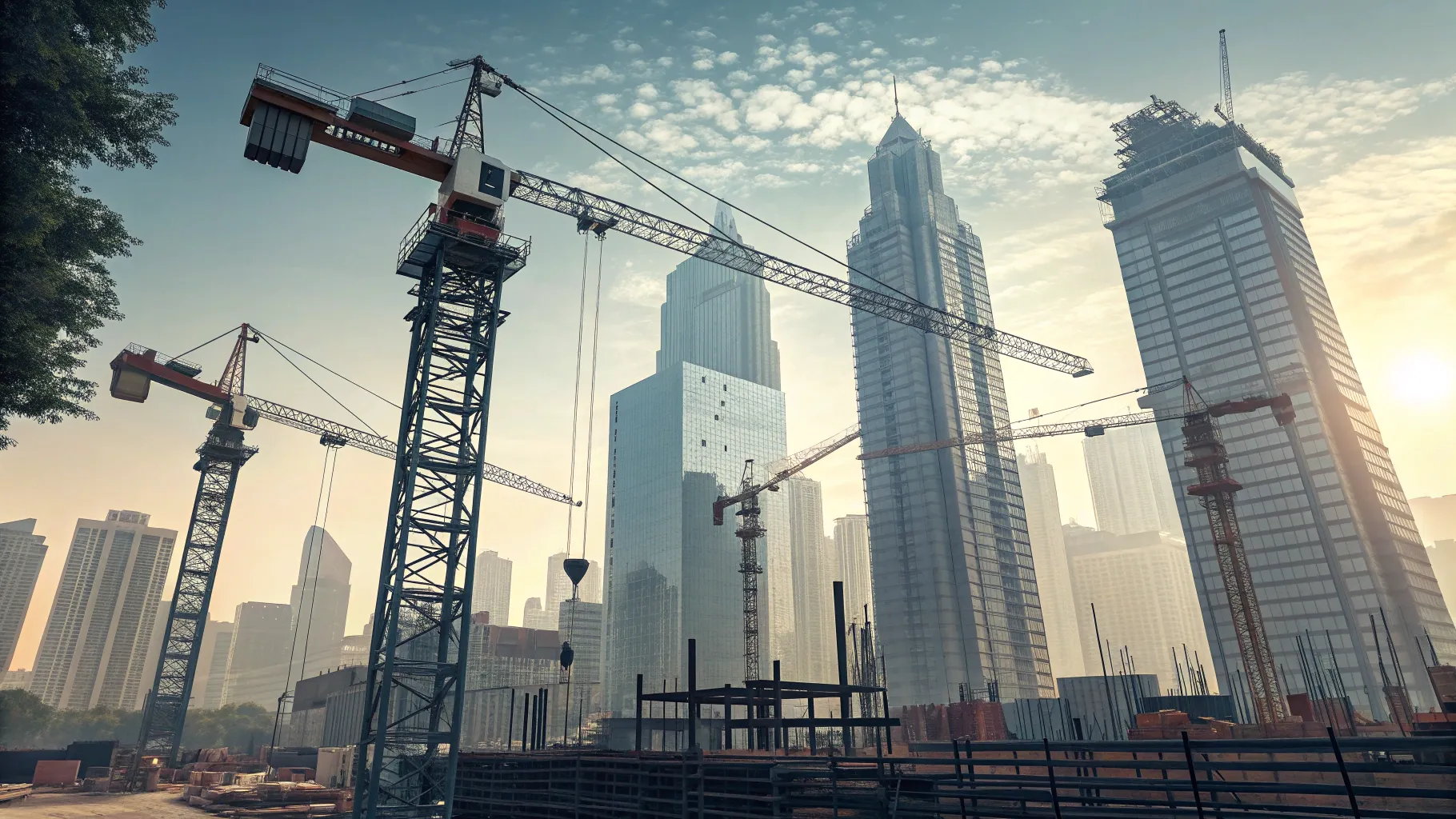
Decoding the Anatomy of a Tower Crane Mast Section
Every towering feat achieved by a construction crane falls back on its most basic element, the mast section. Engineered with meticulous attention to detail and safety, mast sections serve as the skeleton around which crane operations pivot. Generally measuring between 1.5 and 3 meters long, each section embodies a robust design featuring high-grade steel composition, ensuring durability in even the harshest of environments. Let's delve deeper into the essential components of these vital sections: lattice framework, bolted connections, and stability reinforcements.
1. Lattice Framework: The name, though unassuming, is an apt descriptor for this intricate design choice. A lattice framework's web-like appearance distributes loads evenly across multiple joints, thus preventing wear and tear from becoming concentrated at any one spot. This design optimizes strength-to-weight ratio, a necessity for handling the massive weight loads encountered on construction sites across bustling cities like New York and Dubai.
2. Bolted Connections: As cities evolve faster than ever, flexibility is gaining precedence. Bolted connections enable rapid assembly and disassembly of mast sections, allowing cranes to adapt their height efficiently. Even as a building's structural requirements change mid-project, cranes can rise to the occasion—literally—meeting new heights with speed and agility.
3. Stability Reinforcements: As cranes stretch skywards, sway and tilt are minimized through additional supports such as internal braces or tension cables. These enhancements mitigate adverse effects from wind pressures or seismic shifts, ensuring projects progress smoothly and securely.
Embracing Modularity: A New Dawn in Construction
The drive for faster, safer, and more efficient construction has ushered in the era of modular mast sections. No longer restricted to the waiting arms of on-site manufacturing, these prefabricated components are seamlessly integrated into projects upon arrival at the construction site. The benefits of this approach are manifold.
- Time Efficiency: Prefabrication drastically reduces assembly time, in line with rigorous urban planning schedules. Reports suggest efficiency increases upwards of 30%, accelerating projects immensely.
- Enhanced Safety: By mitigating time spent on dangerous assembly, modular mast sections significantly reduce risk exposure for workers, creating safer work environments.
- Environmental Benefits: With expedited assembly and reduced on-site emissions, modular practices contribute to more sustainable construction methods, an important factor in contemporary eco-conscious endeavors.
The versatility afforded by modularity also allows for incredible customization, meeting the unique demands of cutting-edge architectural designs effortlessly. For companies like BuildSmart Technologies, modularity isn’t just an efficiency-driven choice—it’s a channel toward innovative construction that redefines city living.
The Mastery Behind Mast Section Assembly
Behind each crane construction lies the expertise of a master team. Skilled professionals oversee rigorous alignment processes employing state-of-the-art electronic positioning tools, amplifying precision to startling degrees, ensuring the accurate stacking of each mast segment. Mistakes in alignment aren't just unacceptable—they can compromise the safety of the entire operation.
To prepare engineers for such challenges, virtual reality training programs have become widespread, assisting these teams in honing their craft in risk-free environments. Engaging simulations build a knowledge reservoir that goes beyond conventional methods, equipping technicians and operators with real-world solutions before they ever embark on-site.
Such adaptability is crucial not only for safety but also for project efficacy overall. Modular mast sections empower teams to adapt cranes to evolving project needs, whether expanding height or accommodating complex designs. Flexibility translates into steadfast progress, ensuring projects continue smoothly without unwarranted lags.
The core function of a tower crane’s mast section extends beyond mere support—it embodies a symbol of advancing construction technologies. As demand for sustainable, fast-paced building solutions rises, tower crane mast sections, steadfast yet adaptable, become pivotal in driving urban evolution forward.
Authored by FreshLifeWire team