Top Military Equipment Ranking 2025 Global Defense Review
Military Equipment Ranking 2025: An Overview
In 2025, the landscape of global defense and military equipment is more dynamic and competitive than ever. Nations are increasingly investing in advanced military technology, leading to remarkable advancements in performance, capabilities, and operational effectiveness of military machines. With geopolitical tensions and evolving strategic needs, understanding military equipment ranking becomes crucial for analysts, defense contractors, and enthusiasts alike.
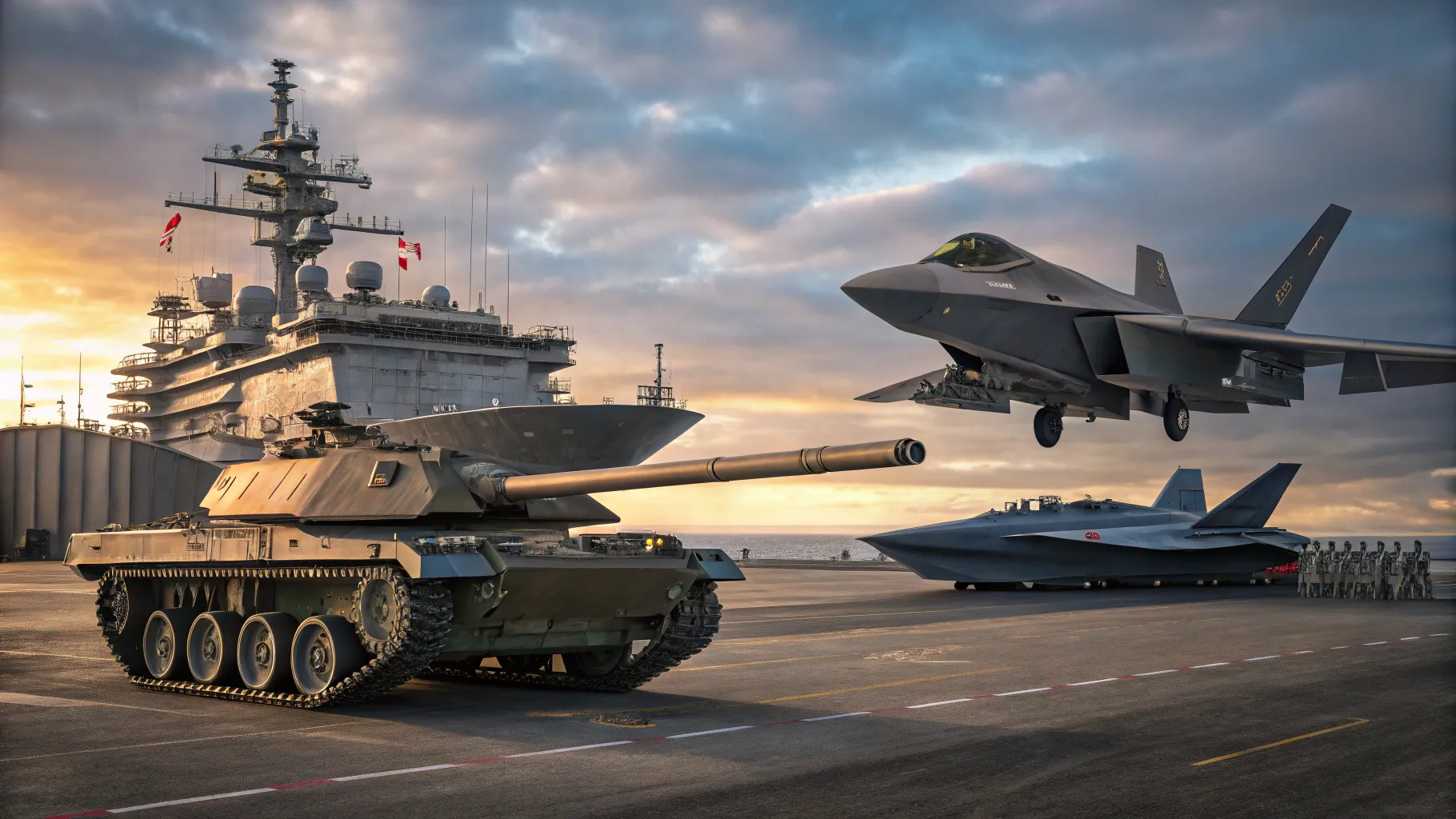
Global Defense Equipment Comparison: The Leading Players
Evaluating military equipment around the world involves analyzing the cost, capabilities, and overall effectiveness of varying assets across different nations. The top contenders in military equipment ranking as of 2025 feature an impressive lineup of advanced machinery, armored vehicles, and aerial combat capabilities.
- United States: The U.S. continues to dominate with cutting-edge technology in military aviation and naval assets. Notable mentions include the F-35 Lightning II stealth fighter and the Gerald R. Ford-class aircraft carriers, which represent the pinnacle of military air and sea power.
- Russia: With its array of armored vehicles such as the T-14 Armata tank and advanced missile systems, Russia holds a substantial position in ground warfare capabilities. Their military engineering equipment, including the Uran-9 robotic tank, showcases innovation in unmanned warfare.
- China: China's rapid military modernization is highlighted by vehicles like the Type 99A tank, which boasts superior speed and firepower. Further, their Chengdu J-20 stealth fighter corresponds to their growing status as a major global military power.
- India: With the indigenous development of the HAL Tejas fighter jet and the Arjun tank, India is making strides in advancing military technology relevant to its unique operational environment.
- European Nations: Countries such as Germany and France are remarkably advancing military machinery with their Leopard 2 and Leclerc tanks. Additionally, NATO collaborative efforts have led to enhanced collective defense strategies.
The distinctions in military equipment ranking are often derived from factors such as combat performance, cost-effectiveness, integration of advanced technologies, and strategic utility.
Worldwide Armored Vehicles Ranking by Performance
The global performance ranking of armored vehicles centers on key players and their innovations in armored warfare. As technology evolves, so do the platforms that nations employ. Some of the standout armored vehicles of 2025 include:
- T-14 Armata (Russia): This next-generation tank features an unmanned turret, advanced armor protection, and superior firepower, making it a formidable force.
- M1 Abrams (United States): Renowned for its combat capabilities, the M1 Abrams is continually upgraded to maintain its status as one of the most powerful tanks worldwide.
- Merkava Mk IV (Israel): The Israeli Merkava is known for its unique design that prioritizes crew safety, combining mobility and firepower effectively in varied terrains.
- Leopard 2A7 (Germany): This advanced tank is frequently cited for its battlefield effectiveness, balancing speed and lethality efficiently.
- Challenger 2 (UK): Known for its durability and combat effectiveness, the Challenger 2 is another key contender in the European armored vehicle scenario.
As nations press on with their research and development in military capabilities, the coated network of data and performance metrics on these vehicles is becoming increasingly critical for assessments.
Cost and Capabilities of Modern Military Machines
Understanding the financial aspect of military equipment is just as crucial as evaluating their capabilities. In 2025, budgets for defense spending are on the rise across many countries, with increasing investment in advanced military technology. For instance, the U.S. military budget is projected to exceed $800 billion, allowing continued research, development, and procurement of cutting-edge defense systems.
The cost of military vehicles often correlates with their advanced technologies, survivability, and combat effectiveness. For instance, the F-35 program has reached costs upwards of $400 billion, yet the multi-role capabilities it offers justify a significant portion of that investment.
- F-35 Lightning II: Known for its versatility, the unit cost of an F-35 is about $80 million, reflecting state-of-the-art stealth and sensor technologies.
- Type 99A (China): With a unit price in the range of $4.5 million, it incorporates significant advances in fire control and tracking.
- M1 Abrams: The cost of around $6 million per unit highlights its sophisticated technology and combat resilience attributes.
In a world where conflicts can arise rapidly, the cost-to-capability ratio remains a key deciding factor for nations prioritizing their military procurement strategies.
Military Aviation and Naval Assets Ranking
A critical dimension of military power lies in air superiority and naval strength. 2025 configurations showcase nations reinforcing their capabilities with advanced aviation platforms and naval assets.
- Stealth Aircraft: Aircraft like the F-22 Raptor and the B-21 Raider from the U.S. signify advancements in stealth technology, making them pivotal in deterrence strategies.
- Aircraft Carriers: The U.S. leads with several operational supercarriers, which are integral to power projection.
- Submarine Warfare: Nations like the U.S. and Russia continue to emphasize advancements in submarine warfare, with the U.S. Virginia-class submarines representing technological prowess.
As the arena of military equipment evolves, the rankings and assessments within the major categories remain heightened, with assessments measured in terms of adaptability, operational versatility, and overall effectiveness in various military scenarios.
This intricate web of military technology and equipment ranking illustrates a definitive picture in 2025, showcasing a world where nations must navigate complex geopolitical landscapes backed by advanced military machinery.
Authored by FreshLifeWire team