The Home Greenhouse: Extending Your Growing Season
Why Every Home Gardener Needs a Greenhouse
For the dedicated home gardener, a greenhouse is more than just a structure; it is an investment in year-round production and crop protection. It enables you to bypass local climate limitations, providing significant advantages over open-air gardening.
Key Benefits for the Home Grower
- Season Extension: Start seeds months before the last frost and continue harvesting delicate crops (like tomatoes, peppers, and herbs) long after the first frost, effectively doubling your growing window.
- Pest and Disease Control: The enclosed structure provides a significant barrier against insects, deer, and common airborne diseases, reducing the need for chemical intervention.
- Cultivating Exotics: Allows for the successful growth of non-native plants, such as orchids, citrus trees, or tropical edibles, which require consistent high temperatures and specific humidity levels.
- Propagation and Starting Seeds: Provides the optimal warm, stable environment for germinating seeds and rooting cuttings, yielding healthier starter plants than windowsill propagation.
Choosing the Right Greenhouse for Your Backyard
The best greenhouse for your home depends on available space, budget, and the desired level of climate control.
1. Design and Placement
- Lean-To Model: Attached to the south-facing wall of your home or garage. Highly energy efficient as it utilizes the stored heat of the main building and requires less building material.
- Freestanding Model (A-Frame or Gable): Provides more space and uniform light exposure on all sides. Best suited for larger yards and commercial-scale hobbyists.
2. Glazing Materials
The material covering the frame determines insulation, durability, and cost:
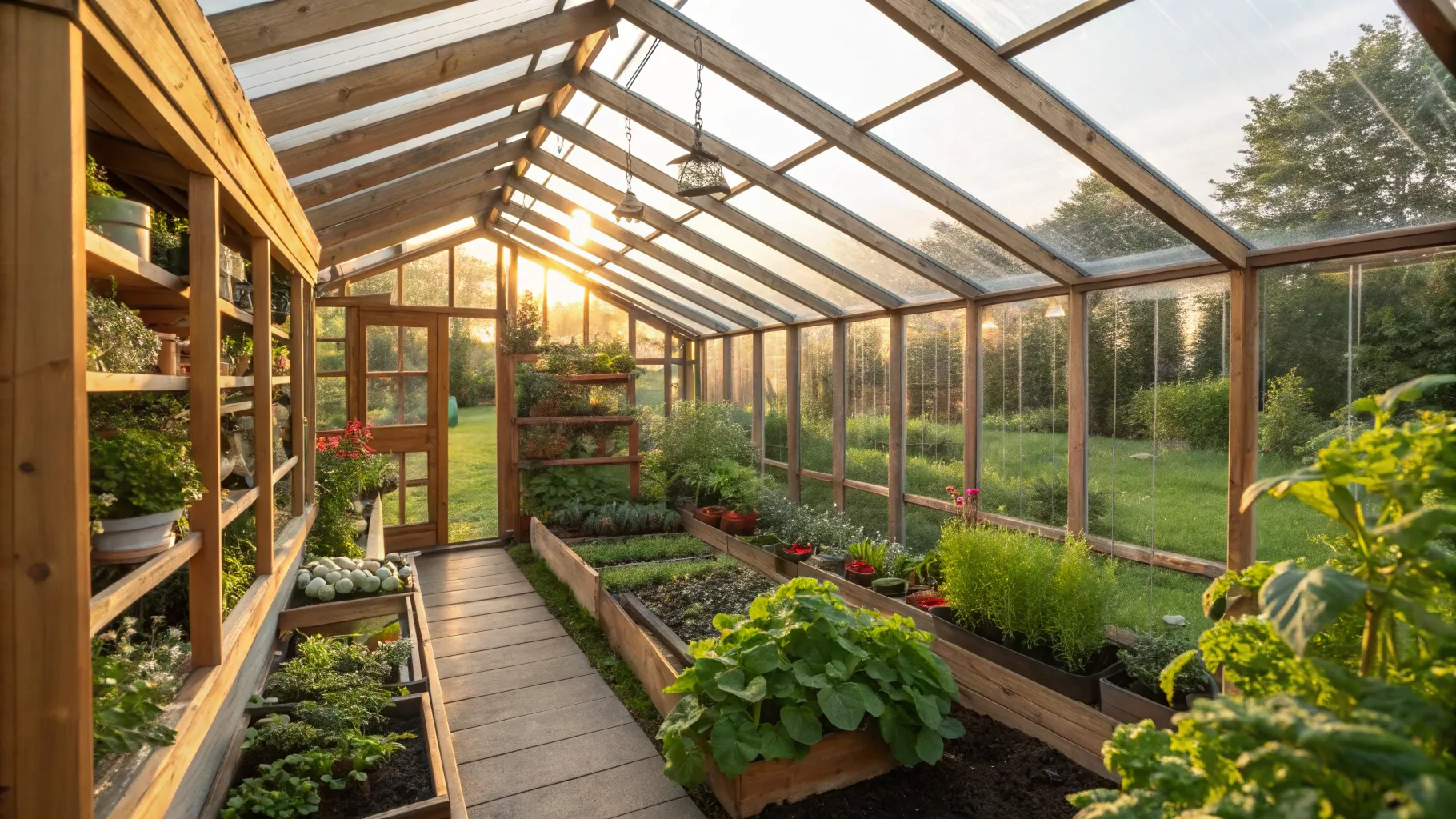
- Glass: Offers superior clarity and aesthetic appeal, but provides less insulation and is the most costly option. Ideal for highly visible, permanent structures (like the one pictured).
- Polycarbonate Panels: Excellent insulation properties (often double-layered), high durability, and good light diffusion (reducing scorching). A popular mid-range choice.
- Polyethylene Film (Plastic Sheeting): The most budget-friendly option. Provides good heat retention but needs annual replacement and offers minimal insulation.
Essential Climate Management for Optimal Growth
Successful greenhouse gardening requires actively managing three key environmental variables:
- Ventilation: Necessary to prevent overheating and humidity buildup. Use **roof vents** (automatic or manual) and **fans** to ensure constant air exchange, especially on sunny days.
- Heating: For frost protection and winter growing, a dedicated heat source (e.g., electric heater or propane burner) is necessary. Insulation (such as bubble wrap liners) helps minimize heating costs.
- Watering and Humidity: Plants in a greenhouse dry out quickly. Install a simple drip irrigation system or misting system to maintain consistent soil moisture and regulate air humidity, which is vital for tropical species.
Conclusion: From Hobbyist to Year-Round Producer
Installing a home greenhouse is the ultimate upgrade for any gardener looking to maximize production, experiment with new varieties, and enjoy fresh harvests regardless of the season. Start with the right design based on your climate and budget, and master the art of simple climate control to unlock its full potential.
Authored by FreshLifeWire team