A Comprehensive Review of the Most Popular Perennial Landscape Plants
Facts:
- Perennial plants live for more than two years.
- Low-maintenance gardening is a top trend for homeowners.
Choosing the Right Perennials for Enduring Garden Beauty
Creating a vibrant and lasting garden is a goal for many homeowners, and the key often lies in selecting the right plants. Perennials, which return year after year, form the backbone of any successful garden design. This review delves into the most popular perennial plants, offering insights into how to use them to create stunning, low-maintenance landscapes. Whether you are looking for hardy foundation plants to anchor your garden beds or simply want to enjoy continuous color with minimal effort, understanding the characteristics of these top performers is the first step towards achieving the garden of your dreams. We will explore options perfect for various needs, including creating beautiful low pruning beds.
Top Perennial Picks for Stunning Landscapes
Selecting the right perennials can transform your outdoor space. The key is to choose plants that suit your climate, soil type, and the amount of sunlight your garden receives. The following are some of the most reliable and beloved options that consistently perform well in a variety of settings, making them some of the most popular perennial plants among both novice and experienced gardeners.
Hostas: The Shade Garden Staple
Hostas are celebrated for their lush foliage, which comes in a vast array of colors, sizes, and textures. They thrive in shady areas where other plants might struggle, making them exceptional hardy foundation plants for north-facing gardens or under large trees. Their low-maintenance nature means they fit perfectly into designs for low pruning beds, requiring little more than occasional watering and division every few years to keep them healthy.
Coneflowers (Echinacea): A Pollinator's Paradise
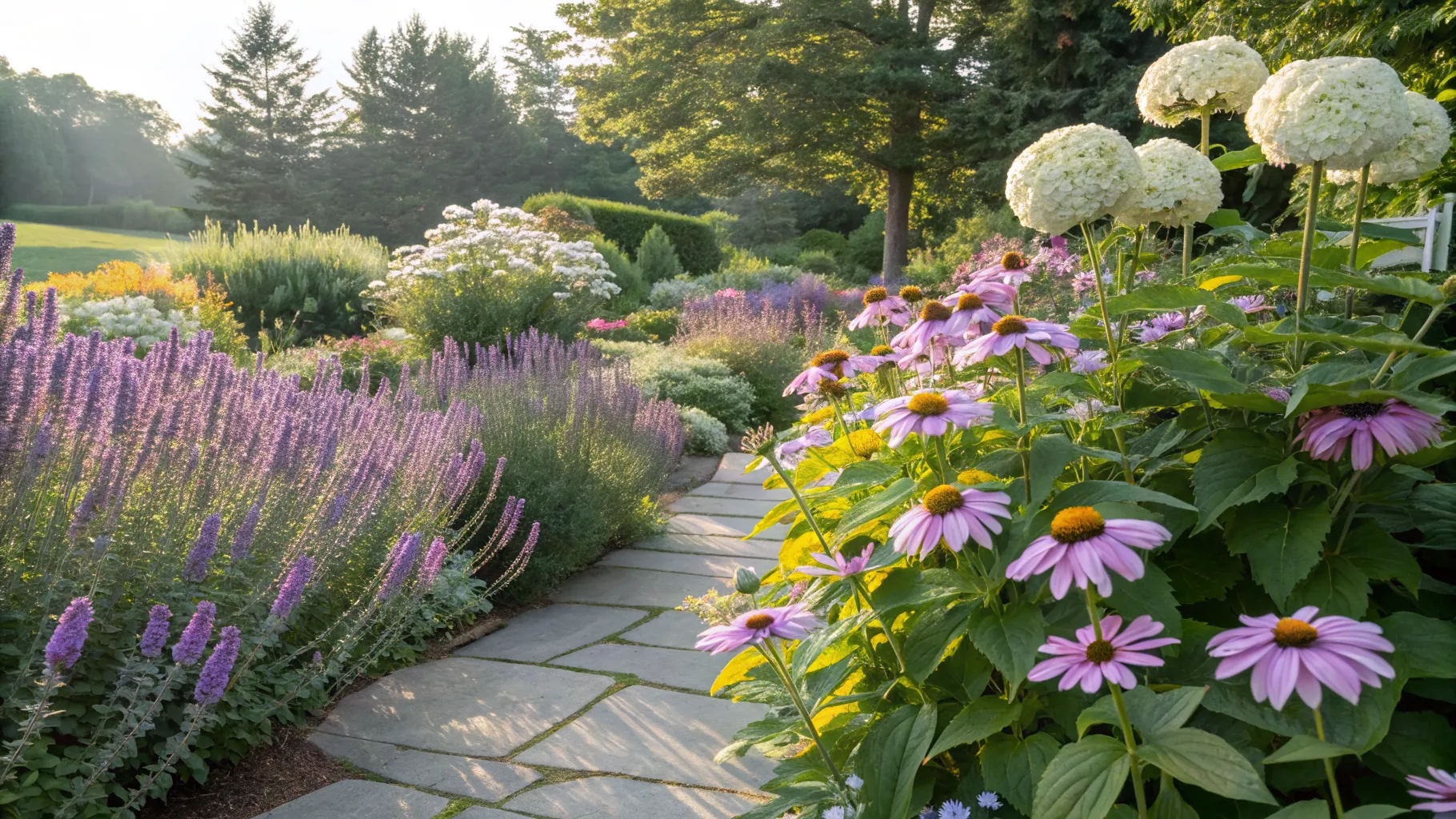
Coneflowers are a sun-loving favorite, known for their daisy-like blooms in shades of purple, pink, white, and yellow. They are incredibly drought-tolerant once established and attract a wealth of pollinators like bees and butterflies. Their sturdy stems and long blooming season make them a fantastic addition to any garden aiming for vibrant, summer-long color. They are a cornerstone of many of the best perennial landscaping layouts due to their reliability and visual appeal.
Black-Eyed Susans (Rudbeckia): The Sunshine of the Garden
With their cheerful yellow petals and dark centers, Black-Eyed Susans bring a burst of sunshine to any landscape. They are exceptionally easy to grow and will spread to create a beautiful, naturalized look over time. These plants are tough, resilient, and can handle a variety of soil conditions, making them one of the most popular perennial plants for gardeners seeking a high-impact, low-effort option.
Hydrangeas: The Versatile Shrub
While technically shrubs, many hydrangea varieties are treated as perennials in garden design. They are fantastic as slow growing flowering bushes seniors often prefer due to their manageable size and stunning, long-lasting blooms. Varieties like 'Bobo' or 'Little Lime' are compact, require minimal pruning, and provide enormous flower heads from summer through fall, making them excellent hardy foundation plants.
Designing the Perfect Perennial Garden Layout
Achieving a professional-looking garden involves more than just picking beautiful plants; it requires thoughtful planning. The best perennial landscaping layouts incorporate principles of design such as repetition, texture, and layering. Start by placing your taller hardy foundation plants, like ornamental grasses or hydrangeas, at the back of the bed. Then, layer in mid-sized plants like Coneflowers and Black-Eyed Susans. Finally, fill in the front with lower-growing perennials like Hostas or Sedum. This technique creates depth and visual interest, ensuring there is always something in bloom. A well-designed layout also simplifies maintenance, especially when planning for low pruning beds by giving each plant adequate space to mature.
Creating Beautiful, Low Pruning Beds
For those who desire a beautiful garden without the constant upkeep, creating low pruning beds is the perfect solution. This approach focuses on selecting plants that naturally maintain a desirable shape and size, reducing the need for frequent trimming. Here are some actionable tips:
- Choose Slow-Growing Varieties: Focus on plants labeled as 'dwarf' or 'compact'. This is especially beneficial when selecting slow growing flowering bushes seniors can easily manage. They provide the beauty of larger shrubs without the demanding maintenance.
- Proper Spacing is Key: Give plants enough room to grow to their mature size. This prevents overcrowding, which is a common reason for excessive pruning. Proper spacing is a cornerstone of the best perennial landscaping layouts and promotes healthy air circulation.
- Group Plants by Need: Place plants with similar water and sun requirements together. This simplifies care routines and ensures all plants thrive. Many of the most popular perennial plants are adaptable, but grouping them strategically makes a significant difference.
- Mulch Generously: A thick layer of mulch suppresses weeds, retains soil moisture, and protects plant roots. This single step dramatically reduces overall garden chores, making your low pruning beds truly low-maintenance.
Frequently Asked Questions
What are the most popular perennial plants for beginners?
For beginners, it's best to start with tough, adaptable plants. Hostas, Daylilies, Black-Eyed Susans, and Sedum are excellent choices. They tolerate a wide range of conditions, require minimal care, and provide reliable color and texture year after year, making them a fantastic introduction to perennial gardening.
How can I create the best perennial landscaping layouts for a small yard?
In a small yard, focus on vertical space and multi-season interest. Use compact or dwarf varieties of your favorite plants. Incorporate a mix of evergreen and deciduous perennials to ensure your garden looks good year-round. Using a limited color palette can also make a small space feel larger and more cohesive. Planning for low pruning beds is also crucial to avoid the space feeling overgrown.
Are there any good slow growing flowering bushes seniors can easily maintain?
Absolutely. Dwarf hydrangea varieties like Hydrangea paniculata 'Bobo' are perfect. Others include Spirea 'Double Play Candy Corn' and Weigela 'Spilled Wine'. These plants offer beautiful flowers without growing too large, require very little pruning, and are generally disease-resistant, making them ideal choices.
References
- The National Gardening Association: Perennial Guides
- Royal Horticultural Society Plant Finder
- University Extension Office: Landscape Design Principles
- Fine Gardening Magazine: Plant Selections
Authored by FreshLifeWire team