Organizing Recipes Into Clear Digital Folders: A Guide for Seniors
Facts:
- Digital recipe management saves significant kitchen space.
- A growing trend for seniors is adopting digital tools for daily tasks.
From Shoebox to Screen: Mastering Digital Recipe Organization
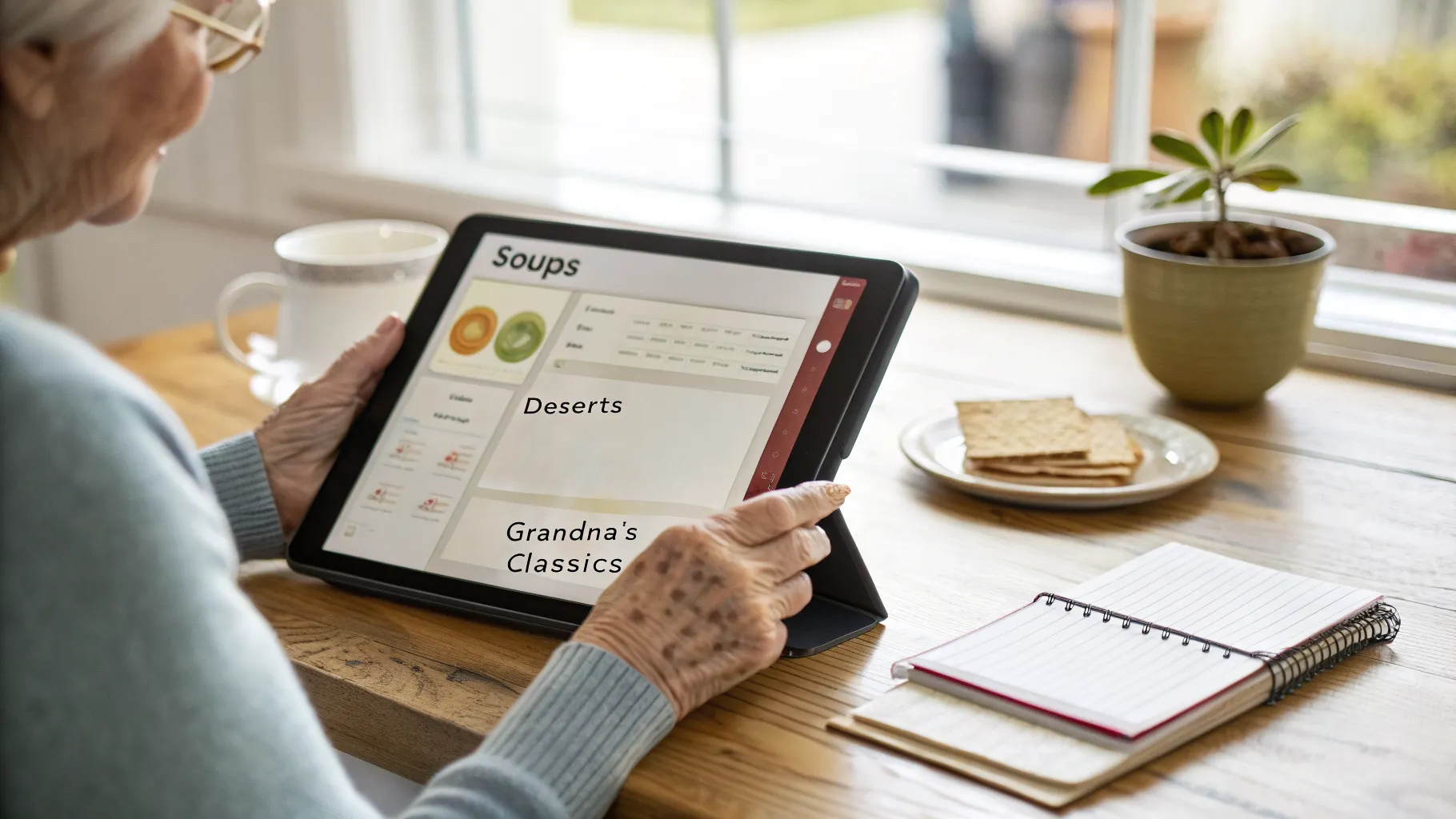
For generations, cherished recipes were passed down on stained index cards, clipped from magazines, or tucked into the pages of a beloved cookbook. While nostalgic, this method can become cluttered and inefficient. The modern solution is organizing recipes into clear digital folders, a process that brings order, accessibility, and ease to your culinary life. This transition is especially beneficial for those looking to simplify their kitchens and preserve family traditions. This article serves as an informative guide to digital data filing for your most precious recipes, covering everything from the first steps of converting your collection to mastering the technology on your tablet, with a special focus on making the process straightforward and manageable for everyone, including those new to digital tools.
Getting Started: Your First Steps to Digital Freedom
The journey to a perfectly organized digital recipe collection begins with a simple, manageable process. The first task is to gather all your recipes from their various hiding spots—the shoeboxes, the drawers, and the overstuffed binders. Once you have everything in one place, you can begin the important work of sorting and deciding what to keep. This is the perfect opportunity to declutter. The next phase is the core of the project: learning how to digitize old cookbooks and handwritten cards. You don't need fancy equipment; the camera on your smartphone or tablet is perfectly sufficient. Take clear, well-lit photos of each recipe. For typed recipes or magazine clippings, you can use a scanner app on your phone, which often has optical character recognition (OCR) to convert the image into editable text. This initial effort provides the foundation for a searchable and organized system, making this informative guide to digital data filing your first step towards a streamlined kitchen.
Choosing Your Digital Kitchen Assistant: The Best Recipe Organizer App for Seniors
Once your recipes are digitized, you need a place to store them. While a simple folder system on your computer or tablet is an option, a dedicated app offers powerful features designed specifically for cooking. When looking for the ideal recipe organizer app for seniors, prioritize simplicity, readability, and ease of use. Look for apps with large fonts, intuitive interfaces, and minimal clutter. Top features to consider include the ability to import recipes from websites with a single click, create custom categories or folders, add your own photos, and generate shopping lists automatically. Some apps even offer a 'cook mode' that keeps the screen on and displays the recipe in a large, easy-to-read format. Spend some time exploring options like Paprika, AnyList, or Recipe Keeper. Many offer free trials, allowing you to find the perfect fit for your needs before committing. This choice is crucial for a successful transition to digital recipe management.
Mastering Your Device: Understanding Tablet Folder Configuration Paths
For those who prefer not to use a specific app, creating a manual folder system on your tablet is a powerful alternative. This approach gives you complete control and doesn't require a subscription. The key is understanding tablet folder configuration paths. On an iPad, you would use the 'Files' app, and on an Android tablet, you'd use a file manager app like 'Files by Google'. The process is similar on both: create a main folder called 'Recipes'. Inside this folder, create subfolders for your main categories, such as 'Main Courses,' 'Desserts,' 'Soups,' and 'Family Favorites.' You can create further sub-subfolders, for example, inside 'Main Courses,' you could have 'Chicken,' 'Beef,' and 'Vegetarian.' When you save a digitized recipe image or document, you simply navigate through this path to save it in the correct location. This method is a core principle of a good informative guide to digital data filing and ensures you can always find what you're looking for without relying on a third-party application.
Beyond Text: Sorting Cooking Clips Online Over 60
Recipes today are not just text; they are often videos and online tutorials. Managing these digital clips is another essential skill. The challenge of sorting cooking clips online over 60 can be easily solved with tools you already use. On platforms like YouTube, you can create dedicated playlists. Make a playlist called 'Favorite Recipes' and within it, you can add sections for different types of dishes. When you find a cooking video you love, simply click 'Save' and add it to the appropriate playlist or section. Another method is using a bookmarking service like Pocket or your web browser's built-in bookmarks. Just like with files, you can create bookmark folders for your recipes. This keeps all your online video resources neatly organized and separate from your other internet browsing, making sorting cooking clips online over 60 a simple and effective process.
Actionable Tips for a Sustainable Digital Recipe System
Maintaining an organized digital system is just as important as setting it up. Follow these tips to ensure your recipe collection remains tidy and useful for years to come:
- Be Consistent with Naming: When you save a new recipe file, use a consistent naming convention. For example, 'Cuisine-DishType-Name.jpg' (e.g., 'Italian-Pasta-Lasagna.jpg'). This makes searching for files much easier, even without a dedicated app.
- Set Aside Time to Organize: Dedicate a small amount of time each month to file away new recipes you've saved. Letting them pile up on your device's desktop or in a 'Downloads' folder can quickly lead to digital clutter. This is a key part of any informative guide to digital data filing.
- Back Up Your Collection: Digital files are convenient but can be lost. Regularly back up your recipe folder to a cloud service (like iCloud, Google Drive, or Dropbox) or an external hard drive. This protects your precious collection, especially after you've learned how to digitize old cookbooks.
- Use Tags and Notes: If your chosen recipe organizer app for seniors allows for tags, use them! Tag recipes with keywords like 'quick-dinner,' 'holiday,' or 'gluten-free.' This provides another powerful way to search and filter your collection.
Frequently Asked Questions
What is the easiest way for a senior to start organizing recipes digitally?
The simplest starting point is to use the camera on your smartphone or tablet to take clear pictures of your existing recipe cards. Then, choose a user-friendly recipe organizer app for seniors, like Paprika or AnyList, which are designed with simple interfaces to help you categorize those photos easily.
How can I handle very old, fragile family recipes when I digitize old cookbooks?
When you undertake the task of how to digitize old cookbooks with fragile pages or faded handwriting, handle them with care. Place the card or book on a flat, well-lit surface, preferably near a window for natural light. Use your phone's camera to take a high-resolution photo from directly above. Avoid using a flash, as it can create glare. You can then enhance the photo's clarity using your device's built-in photo editing tools to increase contrast and brightness.
Is it complicated understanding tablet folder configuration paths?
Not at all! Think of it like a physical filing cabinet. The main 'Files' app on your tablet is the cabinet. Creating a new folder is like adding a new drawer. Creating a folder inside that one is like putting a labeled file folder in the drawer. It's a visual and intuitive process, and mastering this simple skill is fundamental to good digital organization.
References
- Digital Literacy and Seniors: A 2025 Retrospective
- The Art of Data Management for Personal Use
- Culinary Archiving in the Digital Age
- User Interface Design for the Aging Population
Authored by FreshLifeWire team