Introductory Home Repair and Handyman Classes for Adults: A Guide
Facts:
- The DIY home improvement market is a multi-billion dollar industry.
- There is a growing trend in hands-on skill acquisition for personal empowerment.
Why Enrolling in Handyman Classes is a Smart Investment
Stepping into the world of home maintenance can feel daunting, but it doesn't have to be. For many adults, the idea of fixing a leaky faucet or patching a hole in the wall seems like a job exclusively for professionals. However, a structured beginner home repair training program can demystify these tasks, empowering you with the confidence and skills to manage your own home. These courses are designed specifically for novices, providing a safe and supportive environment to learn practical skills that save you money and increase your self-sufficiency. Engaging in introductory home repair and handyman classes for adults is more than just learning a new skill; it's an investment in your property and your personal capabilities, turning homeownership from a source of stress into a source of pride.
Core Skills You'll Master in Foundational Courses
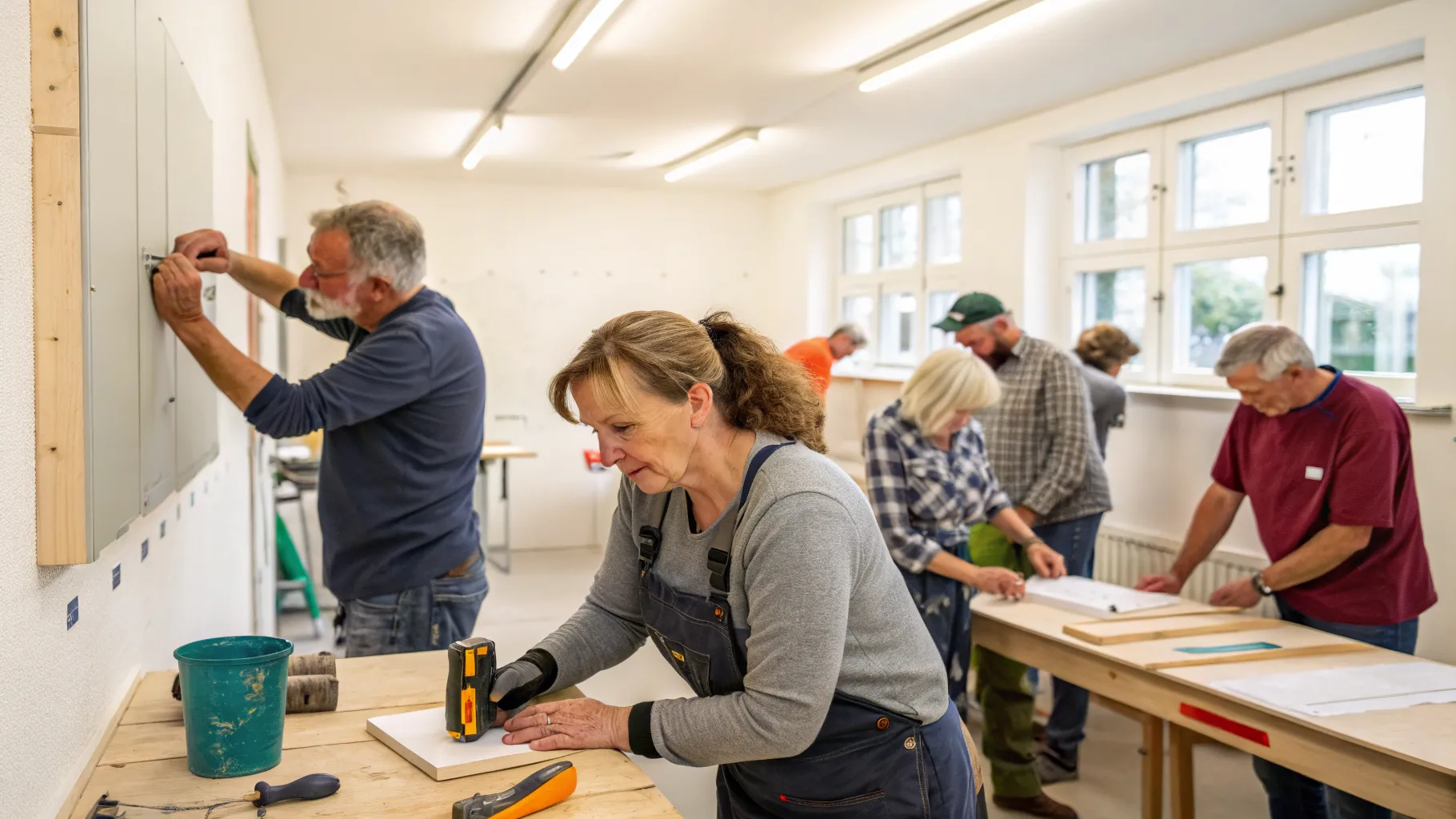
The curriculum of most introductory handyman classes is designed to cover the most common issues homeowners face. These programs break down complex tasks into manageable steps, ensuring that even complete beginners can grasp the fundamentals. The focus is on safety, proper tool usage, and understanding the basic principles behind household systems. You won't just learn how to perform a repair; you'll learn why the problem occurred and how to prevent it in the future, providing a comprehensive education in home maintenance.
Mastering Wall Repairs in Drywall Patching Classes
One of the most valuable skills you can acquire is drywall repair. Scuffs, dings, and holes are an inevitable part of life, but they don't have to be permanent eyesores. In dedicated learn dry wall patching classes, instructors guide you through the entire process, from preparing the damaged area and selecting the right compound to applying, sanding, and finishing for a seamless look. You'll learn the difference between spackle and joint compound and when to use mesh versus paper tape, ensuring a professional-quality finish every time. This skill alone can dramatically improve the appearance of your home's interior.
Demystifying Plumbing Basics
Plumbing issues can be intimidating, but many common problems are surprisingly easy to solve with the right knowledge. Courses covering simple household plumbing fixes teach you how to tackle issues like a running toilet, a dripping faucet, or a clogged drain. You'll learn how to safely turn off the water supply, disassemble and replace faucet washers, clear a P-trap, and even install a new showerhead. Understanding these basics not only saves you the cost of a plumber for minor jobs but also helps you identify when a problem is serious enough to require professional help.
Building Confidence with Carpentry Fundamentals
For those interested in woodworking or simple construction projects, manual carpentry tutorials beginners offer an excellent starting point. These modules cover essential skills such as measuring and cutting accurately, understanding different types of wood and fasteners, and safely operating basic hand and power tools like saws, drills, and sanders. Projects might include building a simple shelf, a small box, or a picture frame. These tutorials build a strong foundation for more ambitious future projects around the house.
Choosing the Right Program for Older Adults and Beginners
When selecting a course, it's crucial to find one that matches your learning style and specific needs. Community colleges, local hardware stores, and specialized trade schools all offer various formats. Some programs are short, weekend-long workshops, while others span several weeks. For mature learners, finding dedicated tool usage seminars older adults can be particularly beneficial. These seminars often focus on ergonomic tools, safety precautions tailored to varying physical abilities, and a more patient, deliberate pace of instruction. Look for classes with small student-to-teacher ratios, positive reviews, and a clear, well-defined curriculum that covers the skills you are most eager to learn. A good beginner home repair training program prioritizes hands-on practice over passive lectures.
Actionable Advice: Gearing Up for Your First Class
Preparation is key to getting the most out of your training. While many courses provide all necessary tools and materials, understanding what to expect can ease any initial anxiety. Here is some practical advice before you begin:
- Dress Appropriately: Always wear closed-toe shoes, preferably sturdy work boots. Avoid loose-fitting clothing or jewelry that could get caught in machinery. Safety glasses are non-negotiable.
- Ask Questions: Instructors are there to help. Never hesitate to ask for clarification if you don't understand a technique or the purpose of a tool. There are no 'dumb questions' in a learning environment.
- Start with the Basics: Don't try to tackle a major renovation after one class. Practice the fundamentals you learned, like making straight cuts or patching small holes, to build your confidence and refine your technique.
- Invest in Quality Starter Tools: After attending a class, you'll have a better idea of which tools you'll use most. Invest in a few quality basics, such as a good hammer, a reliable tape measure, a level, and a versatile screwdriver set.
Overcoming the Fear of Making a Mistake
A significant barrier for many beginners is the fear of making a problem worse. This is a primary reason why introductory home repair and handyman classes for adults are so effective. They provide a controlled environment where mistakes are part of the learning process. You'll work on practice materials, not your actual walls or pipes, under the watchful eye of an expert who can correct your form and guide you. This builds 'muscle memory' and diagnostic skills, so when you face a real issue at home, you can approach it with a calm, methodical mindset learned in your beginner home repair training.
Frequently Asked Questions
What should I expect in my first beginner home repair training class?
Your first class will likely start with a comprehensive safety overview, introducing you to personal protective equipment (PPE) and basic workshop rules. This is often followed by an introduction to a core set of hand tools. The rest of the session will be a hands-on project, such as learning to properly hammer a nail or use a power drill on scrap materials.
Are there specific tool usage seminars older adults should look for?
Yes, many community centers and workshops offer tool usage seminars older adults can benefit from. These classes often emphasize lightweight, ergonomic tools, adaptive techniques to reduce physical strain, and a strong focus on safety and workshop organization. The pacing is typically more relaxed to ensure everyone is comfortable.
How quickly can I learn simple household plumbing fixes?
You can learn the basics of several simple household plumbing fixes in a single afternoon workshop. A 2-3 hour class can typically cover fixing a leaky faucet, clearing a clogged sink drain, and addressing a running toilet. Mastery comes with practice, but the fundamental knowledge is acquired very quickly.
Will I learn everything I need in one introductory course?
An introductory course provides a strong foundation. You will learn the most common repairs and gain the confidence to use basic tools. From there, you can take more specialized courses, such as advanced manual carpentry tutorials beginners or electrical wiring classes, to further expand your skillset.
References
- The Home Depot Workshop & Class Resources
- Lowe's DIY Projects and Ideas
- Community College Continuing Education Catalogs
- Local MakerSpace and Trade School Bulletins
Authored by FreshLifeWire team