Explore Military Boat Types and Their Roles in Warfare
Military Boat Types and Their Uses
Military operations rely heavily on various types of boats and naval vessels, which serve a multitude of functions in modern warfare. As we explore the landscape of military boat types and their uses in 2025, it's clear that developments in naval technology have resulted in increasingly specialized vessels that fulfill specific roles in defense and combat scenarios.
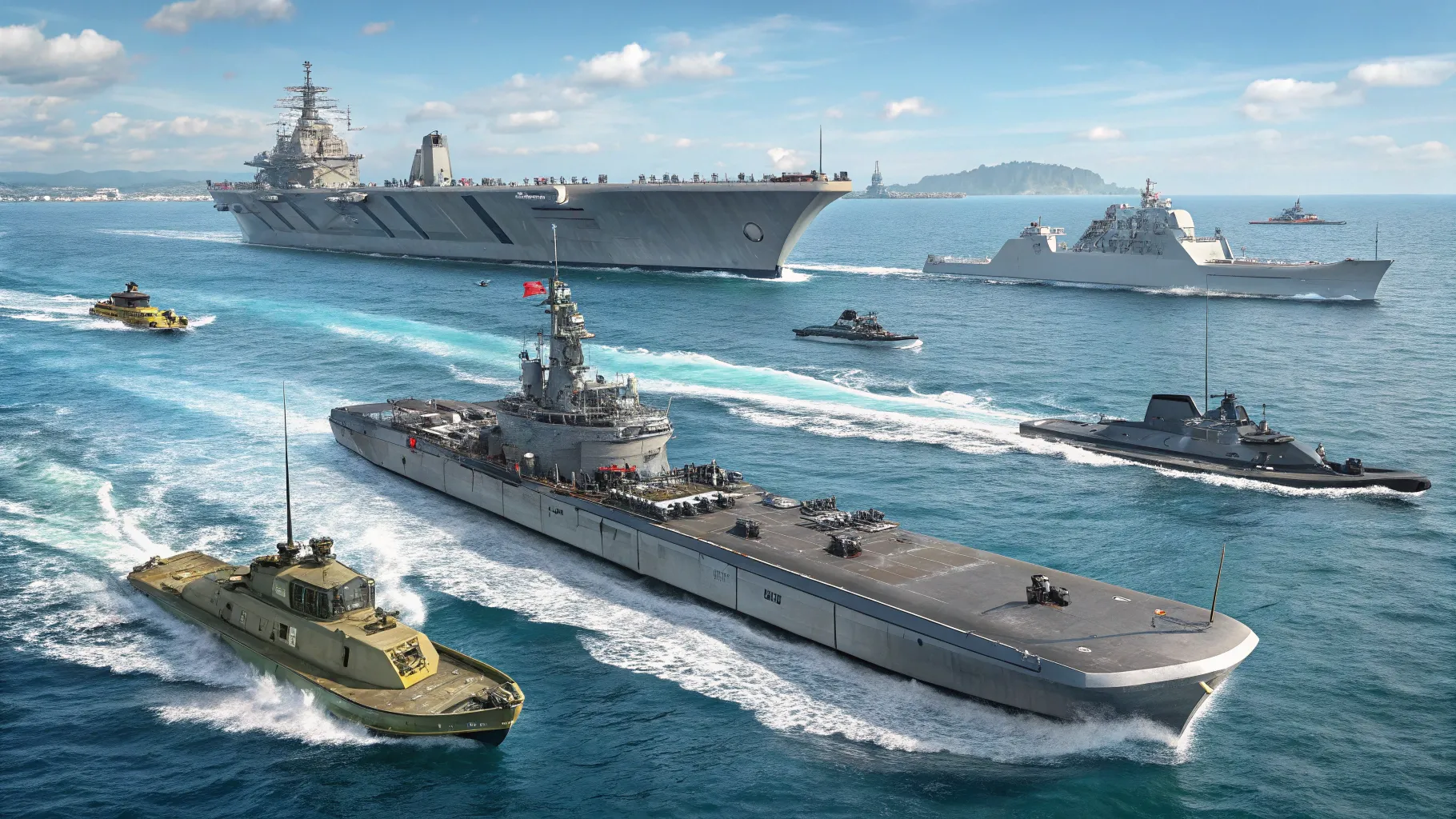
List of Military Boats and Ships
Understanding the different types of military boats is crucial for grasping their diverse roles within naval operations. Here's a comprehensive list that highlights key military vessels:
- Patrol Boats: Fast and agile, designed for surveillance and interception.
- Amphibious Assault Ships: Facilitate land assaults by carrying troops and equipment.
- Submarines: Underwater vessels for stealth operations and strategic deterrence.
- Destroyers: Multi-role fast ships intended for air and sea defense.
- Frigates: Warships equipped to accompany other ships and provide support.
- Landing Craft: Specialized boats for transporting troops and vehicles to shore.
- Aircraft Carriers: Floating airbases that can deploy and recover aircraft at sea.
- Mine Countermeasure Vessels: Equip with technology to detect and neutralize naval mines.
- Coast Guard Cutters: Enforce maritime laws and conduct search and rescue missions.
Functions of Military Boats
Each type of military boat serves distinct functions, integrating advanced technologies to enhance their capabilities. For instance, patrol boats are essential for coastal security, as they carry radar and weapons systems to monitor maritime activities. In more complex warfare scenarios, amphibious assault ships play a vital role by launching troops and vehicles directly onto hostile shores, showcasing their versatility and strategic importance.
Submarines, on the other hand, epitomize stealth with advanced sonar systems and cruise missiles, enabling them to execute covert operations without detection. These vessels are crucial for maintaining a nation's nuclear deterrent capability. Modern destroyers are equipped with Aegis combat systems, providing robust air defense against missile threats, and are often at the forefront of carrier strike groups.
Differences Between Patrol Boats and Warships
While both patrol boats and warships operate within similar maritime environments, their designs and operational focuses differ greatly. Patrol boats are generally smaller, quicker, and primarily used for surveillance, border patrol, and law enforcement on the seas. They excel in shallow waters and are often deployed in coastal areas for defense against drug trafficking and smuggling.
In contrast, warships are larger, heavily armed naval vessels designed explicitly for sustaining combat. They operate on a different scale, engaging in open seas warfare and air defense, utilizing advanced weaponry and communication systems. The key difference is that while patrol boats can handle policing and protection, warships are built for direct engagement with enemy forces during conflict.
Amphibious Military Boats Overview
Amphibious military boats, particularly the landing craft, are integral to modern military strategy. These vessels are designed to operate both in water and on land, allowing for seamless troop deployment during attacks. They can navigate rough waters, thanks to their flat hull, and are engineered to deliver soldiers and equipment directly onto hostile shores.
Consider the United States Navy's use of the "Landing Craft Air Cushion" (LCAC), which employs a hovercraft design that allows it to reach locations that traditional boats cannot. This capability was evidenced during recent joint exercises with allied nations, where swift troop deployment was paramount for operational success.
Modern Naval Technology 2025
The advancements in military boat technology are striking in 2025. With the integration of artificial intelligence and drones, naval forces are seeing enhanced operational efficiency. AI is now commonly used for navigational support in challenging environments, while advanced drones are deployed for reconnaissance missions, providing real-time surveillance data without putting crew members at risk.
Moreover, hybrid propulsion systems are increasingly being adopted to improve fuel efficiency and reduce the ecological footprint of military operations. Submarines like the Virginia-class are equipped with cutting-edge technologies, including stealth enhancements and cyber warfare capabilities, making them essential in maintaining maritime supremacy.
Civilian Uses of Decommissioned Military Boats
Interestingly, the utility of military boats extends beyond military applications. Many decommissioned vessels find new life in civilian sectors. For example, old naval ships can be repurposed for research, training, and even tourism. Countries have seen former aircraft carriers turned into museums, promoting maritime history and education.
Additionally, patrol boats have been transitioned for use in coastal law enforcement and marine conservation efforts, contributing to fishing regulations and ecological monitoring. This trend not only highlights sustainability in the naval sector but also emphasizes the multi-faceted potential of military vessels once they are retired from active duty.
Thus, as military boat types and their uses evolve, their impact stretches far beyond simple defense roles—encompassing technology, education, and environmental stewardship, all shaping the future of maritime operations.
In conclusion, the diversity among military boats and their specialized functions in 2025 reflect ongoing advancements in technology and tactics within the armed forces. As nations continuously modernize their fleets to adapt to ever-changing global threats, the adaptability of these vessels will play a crucial role in maritime security and operational effectiveness.
Authored by FreshLifeWire team