Mastering Dramatic Dialogue and Vocal Projection in Theater Guilds
Facts:
- Proper vocal projection can reduce vocal strain by 30%.
- A growing trend for June 2026 is the expansion of acting workshops for older adults.
Unlocking Powerful Performances: The Core of Vocal Projection in Theater Guilds
The power of a theatrical performance often hinges on the clarity and emotional weight of its dialogue. For many participants in senior community theater groups, mastering the art of vocal projection is the key to transforming a good performance into a truly captivating one. It's not merely about speaking loudly; it's a technical skill that involves breath control, articulation, and an acute awareness of the performance space. This guide delves into the essential techniques and concepts that empower actors to fill any room with their voice, ensuring every line of the script resonates with the audience. From foundational breathing exercises to advanced narrative delivery, the journey to commanding the stage begins with the voice, a vital instrument in any actor's toolkit, especially within the collaborative environment of acting workshops for older adults.
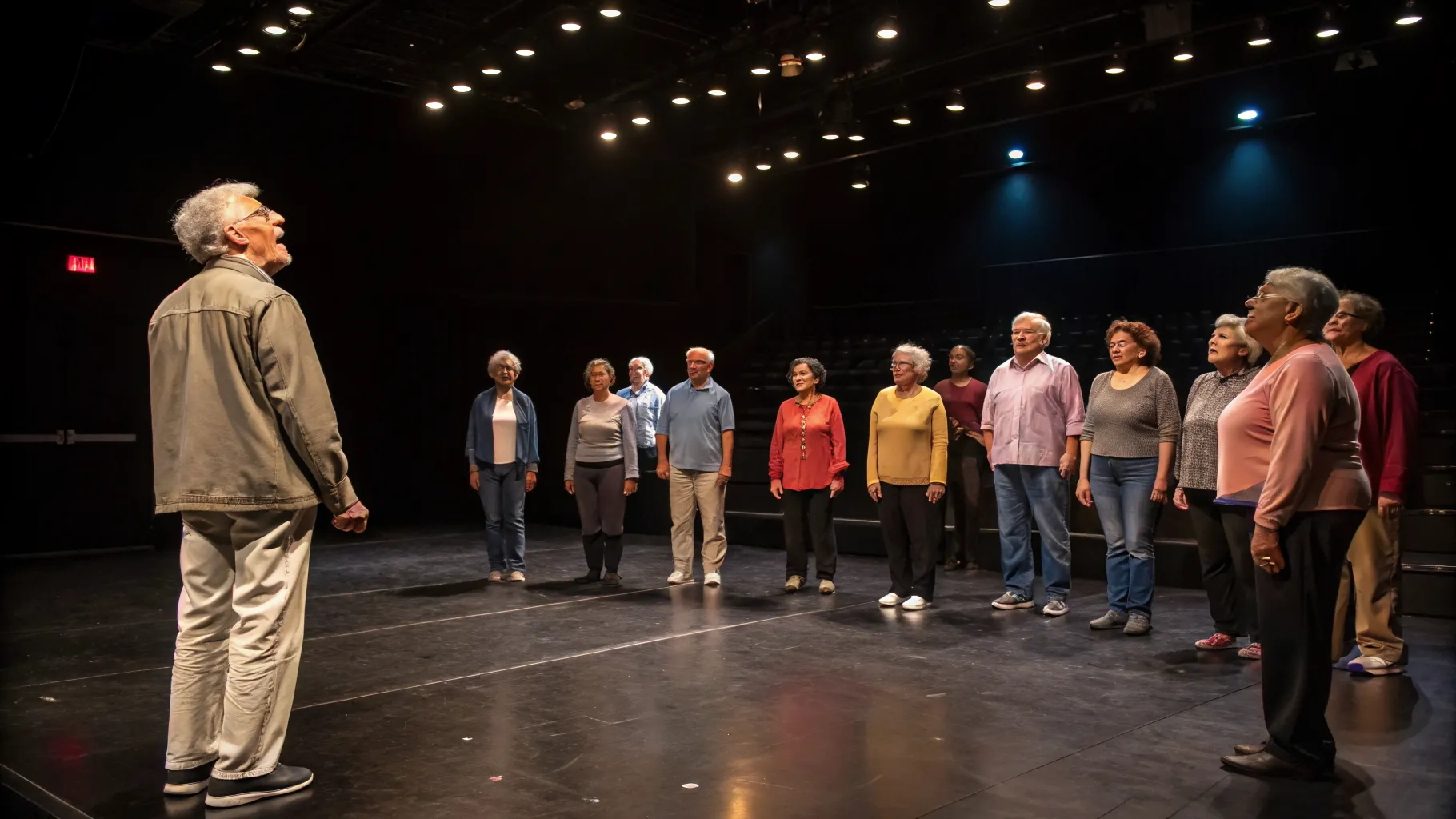
The Foundation: Breath and Support in Stage Text Projection Training
The secret to powerful and sustainable vocal delivery lies not in the throat, but deep in the diaphragm. For anyone engaged in stage text projection training over 60, understanding and utilizing diaphragmatic breathing is non-negotiable. This technique involves using the large muscle at the base of the lungs to control the exhalation of air, creating a steady, powerful stream that supports the voice. Unlike shallow chest breathing, which can lead to vocal strain and a thin, weak sound, diaphragmatic breathing provides the foundation for resonance and volume without shouting. Actors learn to 'speak from the core,' allowing their voice to carry effortlessly to the back of the auditorium. This is a cornerstone of professional training and a primary focus in quality acting workshops for older adults, as it protects the vocal cords from damage while maximizing auditory impact. Regular practice of breathing exercises, such as hissing for sustained periods or practicing lines while lying on the floor with a book on the abdomen, builds muscle memory and makes this powerful technique second nature.
A Deep Dive into Stage Spacing and Its Impact on Dialogue
An actor's voice does not exist in a vacuum; it interacts with the physical environment of the stage. Therefore, a comprehensive approach to vocal performance requires understanding stage spacing configuration. This concept, often called 'blocking' or 'proxemics,' dictates where actors stand in relation to each other and the audience. This positioning has a profound effect on how dialogue is perceived. For instance, an actor facing upstage (away from the audience) will need to project significantly more than one facing downstage. The acoustics of the venue, the presence of set pieces, and the proximity to other actors all influence vocal requirements. A skilled actor learns to 'play the space,' adjusting their volume, pitch, and even the direction of their delivery based on their location on stage. This spatial awareness is crucial for ensuring that intimate whispers are heard and impassioned speeches do not become overwhelming. This synergy between voice and space is a key lesson within any informative guide to theatrical narrative, as it directly impacts storytelling and audience engagement.
Crafting Compelling Stories: The Informative Guide to Theatrical Narrative
Effective vocal projection is ultimately a tool in service of the story. A truly informative guide to theatrical narrative emphasizes that how a line is said is just as important as the words themselves. The goal is not just to be heard, but to convey character, emotion, and subtext. This is where vocal dynamics—variations in pitch, pace, volume, and tone—come into play. An actor might use a lower, resonant pitch to convey authority, or a rapid, higher-pitched delivery to signal anxiety. These choices are what bring a character to life and make the narrative compelling. In senior community theater groups, where actors often bring a wealth of life experience to their roles, honing the ability to match vocal technique with emotional truth can lead to incredibly powerful and authentic performances. It's about modulating the voice to reflect the character's journey, ensuring that the vocal performance supports and enhances the overarching story being told on stage.
Actionable Techniques from Acting Workshops for Older Adults
To translate theory into practice, specific, repeatable exercises are essential. Many successful acting workshops for older adults focus on tangible drills that build vocal strength and versatility. Here are some actionable techniques to incorporate into your practice:
- Diaphragmatic Breathing Drills: Lie on your back with a small book on your abdomen. Inhale slowly through your nose, focusing on making the book rise. Exhale on a sustained 'sss' sound, keeping the book as steady as possible as it falls. This builds core breath support, which is fundamental for any stage text projection training over 60.
- Articulation Warm-ups: Practice tongue twisters and enunciation exercises. Over-articulate every consonant and vowel. Phrases like 'red leather, yellow leather' or 'the tip of the tongue, the teeth, the lips' warm up the muscles of the mouth, ensuring crisp and clear diction that can be understood from a distance.
- Resonance Exploration: Hum with your lips closed, focusing on feeling the vibration in different parts of your face and chest (the 'mask'). By directing the sound to these resonant cavities, you can amplify your voice naturally without straining your vocal cords. This is key to developing a rich, full tone.
- Projection with Intent: Practice delivering lines to a partner across a large room. The goal is not to yell, but to send the voice over the distance with clear intention and breath support. This helps in understanding stage spacing configuration and how to adapt your vocal energy to the demands of the space.
Frequently Asked Questions
How can senior community theater groups improve their collective vocal power?
Senior community theater groups can dramatically improve by incorporating group vocal warm-ups into every rehearsal. Starting with 15 minutes of collective breathing exercises, articulation drills, and projection games builds consistency and skill. Hiring a vocal coach for a dedicated workshop can also provide targeted feedback and introduce new techniques that benefit the entire ensemble.
What is the most critical element of stage text projection training over 60?
The most critical element of stage text projection training over 60 is breath support. Prioritizing diaphragmatic breathing over shouting not only produces a richer, more sustainable sound but also crucially protects the aging voice from strain and potential damage. It is the foundation upon which all other vocal skills are built.
Why is understanding stage spacing configuration so vital for actors?
Understanding stage spacing configuration is vital because it directly impacts both audibility and storytelling. An actor's position on stage affects how their voice carries to the audience and influences the emotional dynamics between characters. Proper spacing ensures that every line is heard and that the physical relationships on stage reinforce the narrative's intent.
References
- "The Actor's Voice: A Comprehensive Guide to Vocal Technique"
- "Stagecraft and Performance for the Modern Actor"
- "Journal of Theatrical Arts and Vocal Studies"
- "Directing for Community Theater: A Practical Handbook"
Authored by FreshLifeWire team