What to Know Before Choosing a Chef Knife
Why the right chef’s knife matters
A chef’s knife is often the most important tool in any kitchen, because it handles most everyday tasks like slicing vegetables, trimming meat, chopping herbs and crushing garlic. When the knife feels comfortable and performs well, cooking becomes smoother, faster and more controlled, compared to working with a dull or awkward blade. A well-chosen knife allows you to use less force, which reduces fatigue in your hand and wrist and can help you maintain a more consistent cutting technique. Good balance and a secure grip also contribute to safety, because the knife is less likely to slip when you are working on a wet cutting board or with smooth ingredients. Many cooks find that once they invest in premium kitchen knives, they rely on fewer tools overall and enjoy preparing food more. On the other hand, using a poor-quality knife that loses its edge quickly or feels unstable can lead to frustration and inconsistent results in everyday cooking.
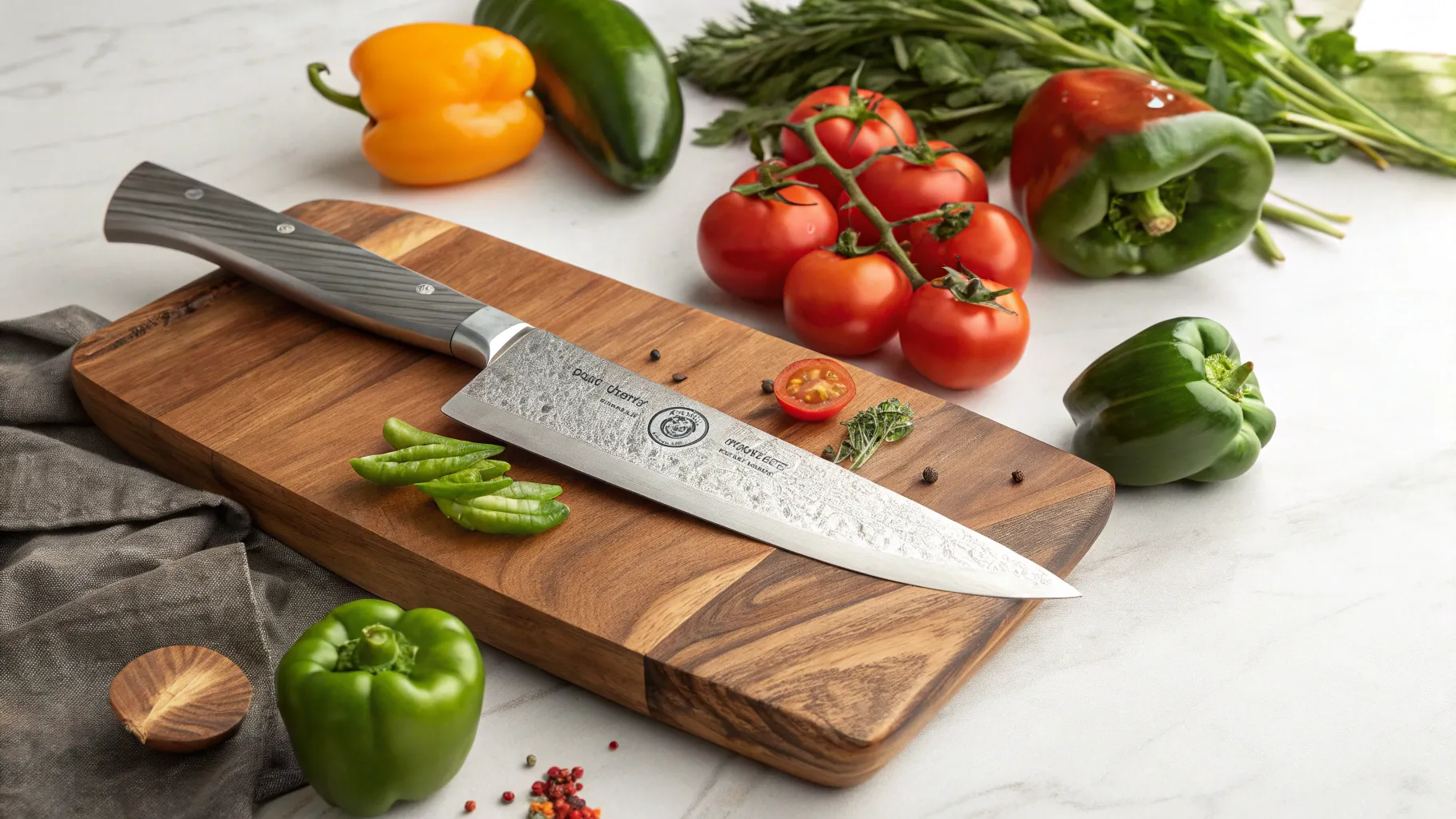
Another reason to think carefully before buying is that a chef’s knife can last for many years if it is chosen and maintained properly. High-quality blades, like those found in top quality chef knife sets, are designed to be sharpened and honed many times rather than replaced frequently. Over time, you may build skills around a single knife, developing muscle memory for the way it moves through different ingredients. That familiarity can improve precision, whether you are making thin slices of onion, dicing root vegetables or breaking down poultry. Because a chef’s knife becomes an extension of your hand, taking time to choose the right one can make a noticeable difference in the way you cook every day.
Understanding blade materials
Blade material strongly influences how the knife behaves during use, including sharpness, edge retention, resistance to stains and ease of maintenance. Many modern chef’s knives use stainless steel, which offers good corrosion resistance and is relatively simple to care for with normal washing and drying. Some blades use higher-carbon stainless steels, which can take a finer edge and hold it longer, but may require more careful maintenance to avoid damage from hard cutting boards or improper storage. Traditional carbon steel blades can be extremely sharp and responsive, yet they can develop patina and may rust if left wet, so they appeal to cooks who are comfortable with a bit more upkeep. There are also advanced alloys and powdered steels, often highlighted in brands similar to seido japanese knives, that are engineered to balance hardness, toughness and corrosion resistance for demanding users.
When comparing knives, it is important to remember that harder steels can achieve very sharp edges but might be more brittle if used improperly, for example on bones or frozen foods. Softer steels are typically easier to sharpen at home, especially if you plan to use whetstones or a manual sharpener rather than a kitchen knife sharpening service. Some home cooks prefer a blade that trades a little edge retention for easier maintenance, while others are willing to learn more advanced sharpening techniques to take full advantage of high-end steels. Reading product details and understanding the type of steel used can give you clues about how often the knife will need sharpening and what kind of care it will require in the long term.
Choosing handle materials
The handle of a chef’s knife plays a major role in comfort, grip and long-term durability. Common handle materials include various plastics, composites, woods and metals, each offering a different feel in the hand. Synthetic handles are often durable, resistant to moisture and less sensitive to temperature changes, which can be reassuring in busy kitchens. Wooden handles provide a warm, traditional feel and can offer excellent grip when shaped well, but they may need more careful cleaning and oiling to stay in good condition over many years. Some high-end models, like well-known lines such as a wusthof classic ikon 8 inch chef knife, combine ergonomic contouring with robust synthetic or composite materials to deliver both comfort and strength.
The shape and texture of the handle matter just as much as the material itself. Some handles are rounded and smooth, which can be comfortable for larger hands but may feel slippery when wet. Others have subtle contours, ridges or a slightly rough surface that helps maintain a secure grip even when you are working with oily or juicy foods. If you use a pinch grip—holding the blade near the bolster with the thumb and index finger while wrapping the other fingers around the handle—the transition between blade and handle should feel natural. Many cooks find that certain signature designs, such as a popular matty matheson knife or other chef-endorsed models, stand out because their handles are tuned to the way professionals actually hold and use their knives over long sessions.
Weight and balance: finding the right fit
Weight and balance are highly personal factors that influence how comfortable a chef’s knife feels during extended use. Some cooks prefer a heavier knife, because the extra mass helps the blade fall through dense ingredients with less effort. Others like a lighter knife that feels quick and nimble, especially when doing fine work like mincing herbs or making thin, precise cuts. Balance refers to how weight is distributed between the blade and the handle; a well-balanced knife typically feels stable when you hold it at the point where the blade meets the handle. If the blade feels much heavier or much lighter than the handle, you may notice extra strain on your wrist or forearm over time.
Blade length also plays into perceived weight and balance. For many home cooks, a standard size around eight inches offers a good compromise between control and efficiency, similar to what you might find in many premium kitchen knives marketed for everyday use. Those who regularly work with large vegetables or bigger cuts of meat may choose a longer blade, while people with smaller hands or compact kitchens might prefer something slightly shorter. Ultimately, the right combination of weight and balance is the one that allows you to cut confidently and comfortably without feeling that you have to fight the knife to get the job done.
Trying before buying
If possible, handling a knife in person before making a decision can reveal details that are hard to judge from photos alone. When you pick up a chef’s knife, pay attention to how the handle fills your hand, whether any edges dig into your fingers and whether the overall shape encourages a natural grip. Try mimicking common motions like chopping, slicing and rocking the blade on an imaginary cutting board to see how it responds. Notice where the balance point falls and whether the knife wants to tip forward or backward as you move it. If you are choosing between different styles, including Western-inspired blades and designs similar to seido japanese knives, this kind of quick test can clarify which profile feels most intuitive for your technique.
For those who cannot test knives in person and need to buy kitchen knives online, detailed product descriptions and user feedback become more important. Look for information on blade length, weight, handle material and recommended grip styles, as well as notes about who the knife is designed for. Some manufacturers and retailers offer trial periods or flexible return policies, which can make it easier to experiment until you find a model that suits your hand and cooking style. In any case, gathering as much information as possible before ordering helps to narrow down options and reduces the chance of ending up with a knife that feels awkward once it arrives.
Making your choice & knife care tips
Choosing a chef’s knife usually involves balancing several factors: budget, blade material, handle comfort, weight, balance and how much maintenance you are willing to do. One approach is to start with a versatile, well-reviewed model and then, over time, expand to top quality chef knife sets if you discover you enjoy using different blade shapes for specific tasks. Another strategy is to invest in a single, high-end centerpiece—similar in spirit to a wusthof classic ikon 8 inch chef knife or a distinctive matty matheson knife—and learn to use it for as many jobs as possible. Whichever route you take, choosing a knife that feels safe and comfortable in your hand is more important than chasing the most expensive or most talked-about option.
Proper care helps protect your investment and maintain performance. Many cooks choose to supplement home sharpening with a periodic kitchen knife sharpening service, especially for blades made from harder steels that benefit from expert attention. Between full sharpenings, using a honing rod regularly can help keep the edge aligned and cutting smoothly. Washing the knife by hand, drying it immediately and storing it in a block, on a magnetic strip or in a protective sheath all reduce the risk of damage. When you take these simple steps and pair them with a thoughtful purchasing decision, even a single well-chosen chef’s knife can serve reliably for years and make everyday cooking more enjoyable.
Authored by FreshLifeWire team